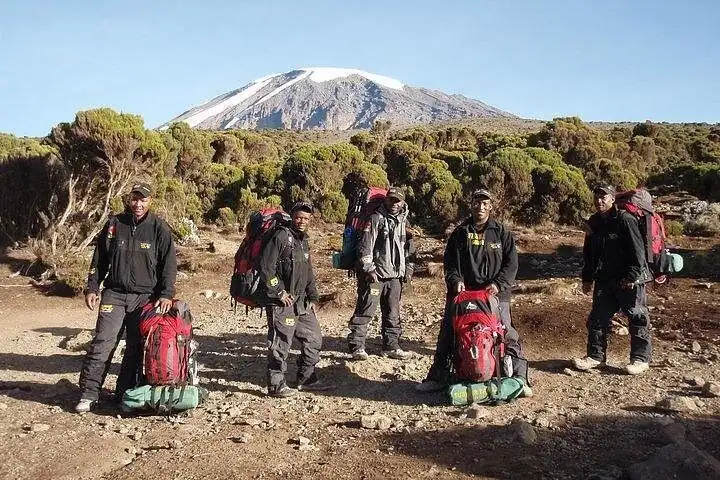
Long before dawn breaks across the African plains, climbers stand beneath a sky filled with stars, their headlamps cutting through the darkness as they take their final steps toward the summit.
The air is thin. The temperature has dropped below freezing. Every step requires determination.
Then, slowly, the horizon begins to glow.
As the first rays of sunlight illuminate the glaciers and volcanic peaks, climbers reach Uhuru Peak—5,895 meters above sea level, the highest point in Africa.
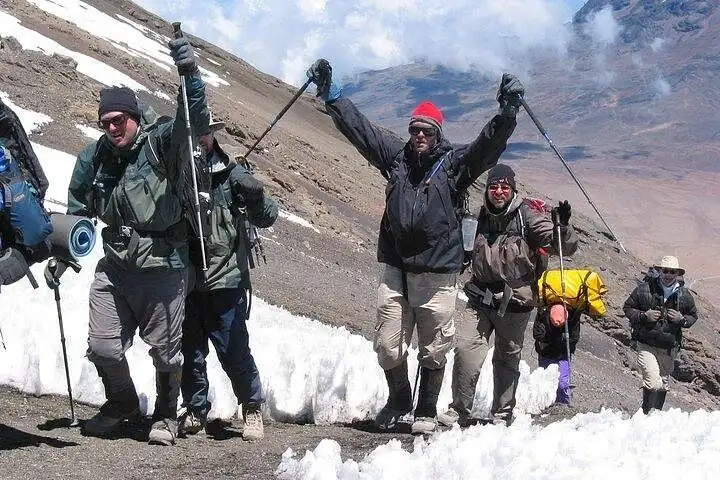
Standing above the clouds, surrounded by endless views stretching across Tanzania and Kenya, many travelers describe the moment as one of the most emotional experiences of their lives.
This is Mount Kilimanjaro.
More than a mountain, Kilimanjaro is a symbol of adventure, achievement, and the spirit of exploration.
Located within Mount Kilimanjaro National Park in northern Tanzania, Kilimanjaro attracts thousands of climbers from around the world each year. As Africa’s highest mountain and the world’s tallest free-standing mountain, it remains one of the planet’s most iconic trekking destinations.
Whether you’re an experienced hiker or embarking on your first major mountain expedition, climbing Kilimanjaro is a journey you will never forget.
What Makes Mount Kilimanjaro Special?
Mount Kilimanjaro is unlike any other mountain in the world.
Unlike many high-altitude peaks that require technical climbing skills, Kilimanjaro can be climbed without ropes, ice axes, or mountaineering experience.
The challenge lies not in technical difficulty but in endurance, preparation, and acclimatization.
What makes the climb truly extraordinary is the incredible diversity of landscapes encountered along the way.
Over several days, climbers pass through:
Few places on Earth allow travelers to experience such dramatic environmental changes within a single journey.

Where is Mount Kilimanjaro?
Mount Kilimanjaro is located in northeastern Tanzania near the Kenyan border.
The mountain rises from the surrounding plains and can be seen from hundreds of kilometers away on clear days.
Approximate distances:
- Moshi: 45 minutes
- Kilimanjaro International Airport: 1 hour
- Arusha: 2 hours
Its accessibility makes Kilimanjaro one of Africa’s most convenient adventure destinations.
Understanding Kilimanjaro’s Three Peaks
Mount Kilimanjaro is a dormant volcanic massif consisting of three volcanic cones.
Kibo
The highest and most famous peak.
Home to:
Mawenzi
The mountain’s rugged eastern peak.
Height:
Mawenzi is technically challenging and not climbed by standard trekking routes.
Shira
The oldest volcanic cone.
Today, much of Shira has collapsed, leaving behind the beautiful Shira Plateau.

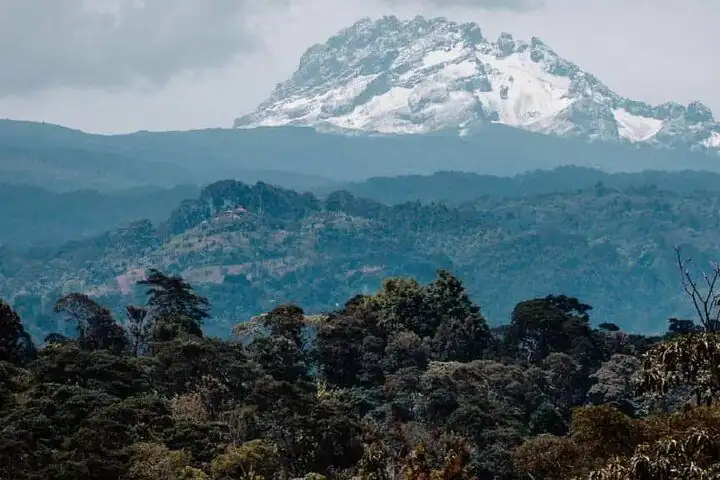
The Journey Through Five Climate Zones
One of Kilimanjaro’s greatest attractions is its ecological diversity.
Rainforest Zone
Altitude:1,800m – 2,800m
Features:
Heath and Moorland Zone
Altitude:2,800m – 4,000m
Features:
Alpine Desert
Altitude:4,000m – 5,000m
Features:
Arctic Summit Zone
Altitude:Above 5,000m
Features:
Reaching this zone feels like stepping into another world.
Popular Kilimanjaro Routes
Several routes lead to the summit, each offering unique experiences.
Lemosho Route
Duration:7–8 days
Advantages:
Best For:Most climbers.
Machame Route
Duration:6–7 days
Advantages:
Best For:Adventurous trekkers.
Marangu Route
Duration:5–6 days
Advantages:
Best For:Travelers preferring hut accommodation.
Rongai Route
Duration:6–7 days
Advantages:
Best For:Those seeking quieter trails.
Northern Circuit Route
Duration:8–9 days
Advantages:
Best For:Travelers prioritizing summit success.
Wildlife in Mount Kilimanjaro National Park
Although famous for trekking, the park also supports fascinating wildlife.
Visitors may encounter:
Mammals
Birdlife
The rainforest zone is particularly rich in wildlife.
Reaching Uhuru Peak
The final summit push begins around midnight.
Climbers slowly ascend through darkness, guided by experienced mountain crews.
Hours later, the sun rises over Africa.
The reward:
- The highest point on the continent
- Spectacular panoramic views
- A profound sense of accomplishment
For many travelers, standing on Uhuru Peak becomes one of life’s defining moments.
Best Time to Climb Kilimanjaro
January to March
Advantages:
June to October
Advantages:
November and December
Can still offer good climbing conditions with fewer visitors.
April and May
Generally wetter conditions and less favorable trekking weather.
How Difficult is Kilimanjaro?
Kilimanjaro is challenging but achievable.
Success depends largely on:
Many climbers underestimate the effects of altitude.
The key principle is simple:
“Pole Pole” (Slowly, Slowly).
Essential Packing List
Climbers should bring:
Proper equipment plays a crucial role in summit success.
Accommodation
Before and After the Climb
Visitors stay in:
Primarily in Moshi or Arusha.
During the Climb
Accommodation depends on the route:
Frequently Asked Questions
Do I need climbing experience?
No. Kilimanjaro is a trekking mountain rather than a technical climb.
What is the success rate?
Success depends on route selection and acclimatization.
Longer routes generally offer higher success rates.
How fit do I need to be?
A reasonable level of fitness is recommended.
Preparation significantly improves the experience.
How cold does it get?
Summit temperatures often fall below freezing.
Can I combine Kilimanjaro with a safari?
Absolutely.
Many travelers combine Kilimanjaro with: